Word Association Tiles
- 4.9
- Rating
- 100.00K
- Installs
- Free
- Price
 Analysis by App-foxy
I went into Word Association Tiles expecting a small word game for filling a spare minute, but its appeal is more thoughtful than that. The basic idea is to sort words and pictures into related categories, turning familiar vocabulary into a calm exercise in recognition and association. It is easy to understand, yet the interesting moments come from deciding whether two items genuinely belong together or merely feel connected at first glance.
That makes it a comfortable choice for a first-time player. You do not need to learn a complicated control scheme, memorize a story, or compete against other players before enjoying it. The game is from Echidna Games, belongs to the word-puzzle category, and is free to play. Its Everyone age rating also makes the presentation approachable for a broad audience, although younger players may still benefit from playing alongside someone who can explain unfamiliar words.
What to Expect When You Start
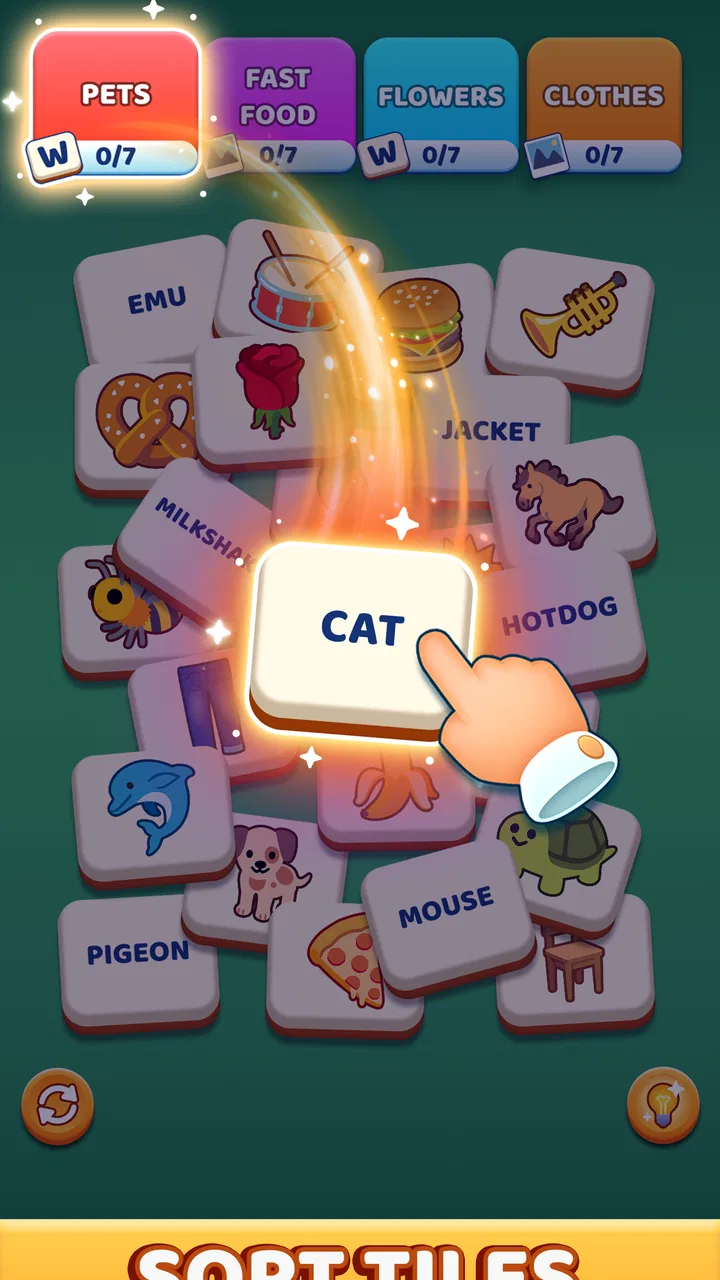
The first thing to understand is that this is not a traditional crossword, spelling test, or dictionary quiz. You are not mainly trying to produce words from letters. Instead, you look at the available tiles and work out which ones share a meaningful category. Some tiles use words, while others use pictures, so the challenge can shift between reading, visual recognition, and general knowledge.
You May Also Like

 Blood Strike: 2.5 Anniversary
Blood Strike’s Loadouts Turn Every Drop Into a Tactical Gamble
A close look at Blood Strike’s custom loadouts: how fast access to signature weapons reshapes its battle royale rhythm, rewards preparation, and narrows the gap between fights.

 Pandora - Music & Podcasts
Pandora’s Music Is Easy to Start, but Harder to Recover
Pandora’s strength is its low-effort path from a seed to a station. Its weak spot is how much confidence it asks you to place in connection, setup, and quiet recovery.

 8 Ball Pool
 Is Built on Rivalries, Rematches, and Routine
A close look at the rivalries, rematches, shared routines, and unanswered safety questions that turn a quick pool match into a persistent mobile community.

 Samsung Music
’s Quiet Strength Is Playing What You Already Own
Its reach comes less from spectacle than from dependable access to a personal library. That simplicity is both the app’s strongest retention engine and its ceiling.

 AccuWeather: Weather Radar
AccuWeather Review: A Quick, Clear Forecast for Everyday Decisions
For everyday plans, the best forecast is the one you can understand quickly. AccuWeather makes rain timing, radar, and local conditions easy to act on, with a few trade-offs.

 Hill Climb Racing
Why Hill Climb Racing Still Turns Crashes Into One More Run
A tiny car, a bumpy hill and one more upgrade: Hill Climb Racing keeps resurfacing because its simple chaos makes every near-miss feel personal.
More From Our News Desk
View All News


I like that distinction because it changes the rhythm of play. A crossword usually tells me how many letters I need and gives me a clue. Here, I have to compare several possibilities at once. A tile may appear to fit because it is associated with another item, but the stronger answer is often the group that shares a more precise relationship. That small difference is where the game gets its personality.
The relaxed format suits short sessions particularly well. I can begin with the intention of solving one arrangement, pause when I need to, and return without having to reconstruct a long narrative. It also works for a quiet break when I want something more engaging than passive scrolling but less demanding than a competitive game.
There is a useful mental habit to develop before making a move: look for the category that is most specific, not merely the connection that is most obvious. If several tiles seem related to food, for example, try to notice whether a smaller group points toward a particular kind of food or setting. This approach reduces guesswork and makes the solving process feel more deliberate.
The game has attracted a 4.9 average from around 1.5 thousand ratings, and it has passed 100 thousand installs. Those figures suggest that the simple format has found an audience, but they should not be mistaken for a promise that every puzzle will suit every player. People who enjoy careful word association will probably settle in quickly. Players looking for action, elaborate progression, or a strong competitive layer may find the experience too quiet.
Getting Comfortable Before the First Puzzle
My advice to a new player is not to rush through the opening interaction. First, scan every visible tile and notice whether the puzzle is asking you to think in terms of objects, places, activities, animals, or another kind of shared idea. The pictures deserve the same attention as the written words; they are not simply decorative alternatives.
It helps to separate certainty from possibility. I usually identify one or two tiles that clearly belong together, then keep the less obvious items in view instead of forcing them into a group. This is more effective than moving everything immediately. A premature choice can make the remaining board look confusing, when the real problem was simply that the first relationship was too broad.
Because the game mixes visual and verbal clues, the first setup is also a small accessibility check for you. If you prefer reading to interpreting images, you may need a little more time with picture tiles. If you are playing with a child or an older relative, speaking the words aloud and describing the images can turn the puzzle into a shared activity rather than a solitary test.
The current version is 1.14.02 and supports devices running Android 6.0 or later. That gives the game a reasonably broad technical reach for Android users. I would still approach installation with the practical expectation that the experience depends on how comfortably you can see the tiles and interact with them on your particular screen. A smaller display may make comparison harder than it would be on a larger phone or tablet.
There is no need to prepare with vocabulary lists or learn a special notation. The better preparation is observational: read the whole board, identify the strongest relationship, and leave room for the possibility that a familiar word is being used in a less familiar category. That mindset gets you to a meaningful first success faster than trying to solve the puzzle through random taps.
How the First Successful Move Feels
The first satisfying moment comes when a group stops looking like a collection of unrelated tiles and starts looking like a deliberate category. I recommend choosing the clearest set rather than the most clever one. Once that group is accepted, the remaining board often becomes easier to interpret because there are fewer competing possibilities.
This is also where the game differs from many quick word apps. In a spelling-focused game, success usually depends on knowing the correct letters. In a category puzzle, success depends on judging relationships. That makes it approachable for people who may not enjoy anagrams or fast vocabulary challenges, while still giving experienced word-game players enough ambiguity to think about.
When I am unsure, I use a three-question check. Do the tiles belong to the same broad subject? Is there a narrower explanation that fits them better? Would that explanation leave the remaining tiles with a sensible group? The third question is especially useful because a category should not only explain the selected items; it should also help make the rest of the puzzle clearer.
A realistic everyday use is a short evening break after work. I can play while waiting for tea to brew or before putting my phone away for the night, and the task gives my attention somewhere specific to go. It is mentally active without demanding the emotional investment of a story game. For families, one person can read the words while another interprets the pictures, making the same puzzle accessible at different reading levels.
Another useful situation is language practice, with an important qualification. The game can encourage recognition of common English words and associations, but it is not a structured language course. A learner may understand the individual tiles yet still struggle with the intended category or with an image that has several possible names. I would use it as a light vocabulary supplement, not as a replacement for lessons, flashcards, or a dictionary.
For older players, the calm sorting task may be more inviting than a timer-based quiz. For children, the Everyone rating and picture-based clues can make the entry point friendly. In both cases, the best results come from treating mistakes as clues about the category rather than as evidence that the player is bad at words.
Where New Players Commonly Get Stuck
The main source of confusion is the difference between association and category. Two items can be related in everyday conversation without belonging to the same intended group. If I see a word connected to travel, I may be tempted to place it beside anything that reminds me of a trip. The puzzle usually rewards a tighter connection, so I have learned to ask what label could sit above the whole group.
Pictures create a second kind of uncertainty. An image may represent an object, an action, or a broader idea, and the first interpretation is not always the useful one. When a picture seems ambiguous, I avoid building the entire solution around it. I solve the more certain words first, then return to the image with the remaining categories in mind.
Another common mistake is assuming that the most familiar category must be correct. A group such as “things found at home” can feel convincing, but it may be too general to explain the intended arrangement. Try testing a narrower description before committing. The right category often has a cleaner boundary and leaves fewer stray tiles.
Players who come from fast matching games may also tap too quickly. This format rewards inspection more than speed. Taking a moment to compare the whole board is not wasted time; it is the central skill. If you are playing with someone else, explaining why a tile belongs can be more productive than simply pointing at the answer.
The relaxed design is a strength, but it is also a limitation for people who need constant novelty or pressure. I would skip this game if your ideal word experience involves a countdown, leaderboards, head-to-head competition, or a large narrative campaign. A crossword app is likely better when you want clue-based deduction, while an anagram game is a better fit when you want to build words from letters. Word Association Tiles sits between those experiences, focusing on meaning and grouping.
It is also worth setting expectations about challenge. A simple interface does not mean every decision is simple, but the game’s appeal comes from the puzzle relationship rather than from complex systems. If you want character upgrades, collectible content, or a deep progression structure, this will probably feel intentionally lightweight. If you want a focused mental exercise that can be understood almost immediately, that same restraint works in its favor.
Turning One Solved Puzzle into a Better Routine
After the first success, I recommend changing the way you play rather than simply playing faster. Start by naming a possible category in your head before moving tiles. Then test whether every item fits naturally. This makes the process more transferable: you are practicing classification, not just reacting to visual patterns.
A second useful technique is to keep a “maybe” group mentally separate from the confirmed group. Do not let one attractive connection dictate the whole board. This is especially helpful when a word could fit two themes. Waiting until another tile supports one interpretation usually produces a cleaner solution than committing early.
If you are using the game for family play, take turns defending a choice. Ask, “What makes these belong together?” rather than asking only whether the answer is right. That turns the puzzle into a conversation about language and meaning. It can also reveal why a child recognizes an image differently from an adult, or why a learner of English chooses a broader category.
For a short daily routine, one puzzle is enough to create a small pause without turning the game into another obligation. I would keep the sessions flexible: play when you want a quiet challenge, stop when the activity begins to feel repetitive, and return later with fresh attention. The format is strongest when it remains a pleasant exercise rather than a task to grind through.
Since it is free, the barrier to trying it is low. That does not make it automatically the right choice, though. Before installing, think about what you want from a word game. If you enjoy sorting ideas, recognizing visual clues, and finding precise relationships, this is a promising match. If you mainly want spelling practice, timed performance, or a competitive score chase, another type of word game will serve you better.
The developer, Echidna Games, has kept the central concept easy to approach, and the broad age rating supports that first impression. My strongest recommendation is to give the game a fair test using the patient method described above: scan the full board, lock in only the clearest category, and treat ambiguous tiles as evidence to examine rather than obstacles to force.
After spending time with it, I see Word Association Tiles as a gentle, focused word game rather than an all-purpose puzzle platform. Its best quality is the way it makes ordinary words and images feel newly debatable. The experience is free, accessible to a wide age range, and simple enough for a first session, yet it still rewards careful thinking once the obvious connections run out.
My recommendation is straightforward: try it if you want a calm category puzzle for short sessions, family play, or light mental exercise. Skip it if you need speed, competition, or a substantial game world. For the right player, the first meaningful success arrives quickly, and the later puzzles are enjoyable precisely because they ask you to slow down and choose your associations with care.
FAQs for Word Association Tiles
01What is the main objective of Word Association Tiles?
Word Association Tiles is a puzzle game that challenges players to connect words through their meanings or associations. The main objective is to clear the board by forming logical connections between tiles, enhancing vocabulary and cognitive skills in an engaging and interactive manner.
02Is Word Association Tiles suitable for all ages?
Yes, Word Association Tiles is designed for a wide range of ages. It offers varying difficulty levels, making it suitable for both children and adults. The game’s intuitive design and educational focus provide a fun and challenging experience for anyone looking to improve their language skills.
03Does Word Association Tiles require an internet connection to play?
No, Word Association Tiles can be played offline. While some features, such as daily challenges or leaderboard updates, might require an internet connection, the core gameplay is fully accessible without one, allowing users to enjoy the game anytime and anywhere.
04How frequently is new content added to Word Association Tiles?
The developers of Word Association Tiles regularly update the game with new puzzles and features. Monthly updates often include new levels, challenges, and sometimes special themed events to keep the gameplay fresh and engaging for all players.
05Are there in-app purchases in Word Association Tiles?
Yes, Word Association Tiles offers in-app purchases. While the game is free to download and play, players can purchase additional hints, remove ads, or unlock premium content. These purchases are optional and designed to enhance the gaming experience without being intrusive.
Pros
- Engaging puzzles enhance cognitive skills.
- Visually appealing and intuitive interface.
- Offers a variety of challenging levels.
- Regular updates with new content.
- Suitable for all age groups.
Cons
- In-app purchases can be costly.
- Advertisements may disrupt gameplay.
- Requires internet for some features.
- Limited hints available for free users.
- Some levels can be repetitive.

Word Association Tiles
Gallery